Costs you can inspect
Keep your authoritative unit cost clear. Do not add shipping or fulfillment again when it is already included.
Set the economics. Choose the competitive approach. Review the decisions and the marketplace evidence.
01 / Protect the cost basis
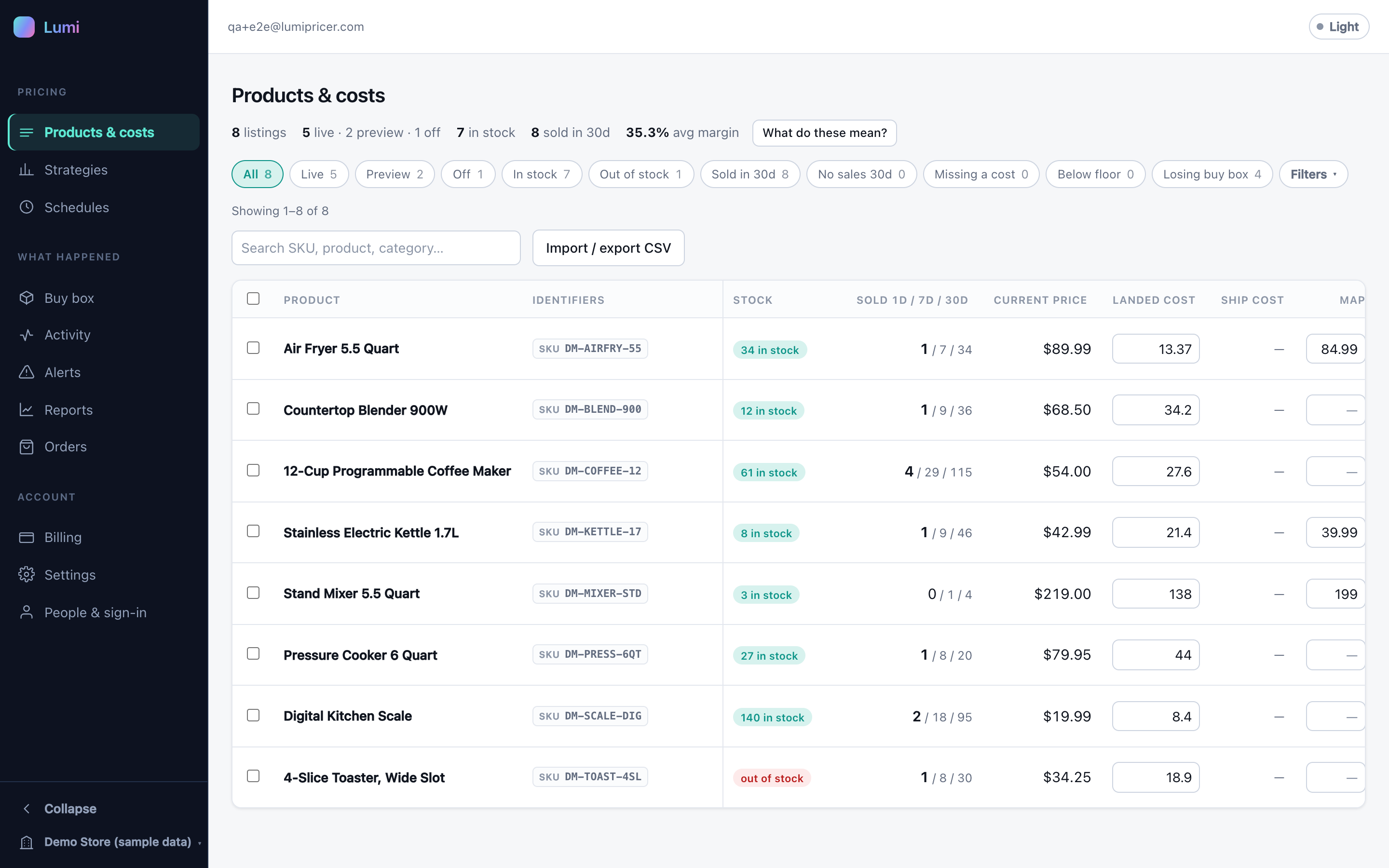
Bring product costs and configured limits into the same workflow as competitive pricing. Review the basis before you turn on live repricing.
Keep your authoritative unit cost clear. Do not add shipping or fulfillment again when it is already included.
Set minimums, maximums and supported margin controls. A competitor’s lower offer does not remove those limits.
Use catalogue and cost-import workflows for groups of listings, then review the accepted changes and any exceptions.
02 / Choose the competitive approach
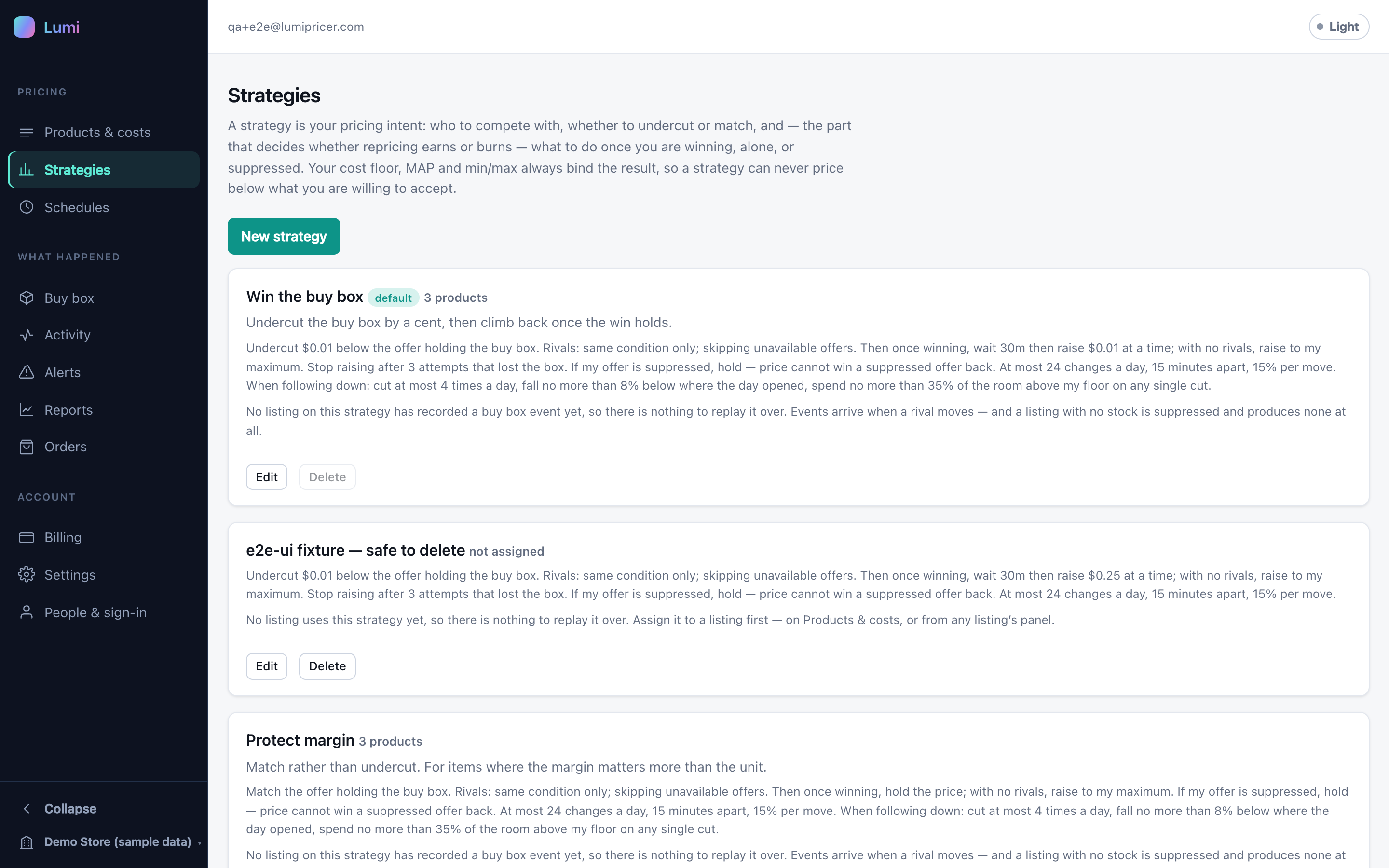
Choose supported targets, actions and limits for your listings. Consider landed price and the available fulfillment evidence, not just an item-price comparison.
Review whether a strategy should match, beat or stay above its selected target, and which supported offer filters are relevant.
A strategy can respond differently when winning, when limits bind, or when no suitable target is available. More cuts are not automatically better.
Preview-only decisions remain separate from live submissions. A replay shows what a strategy would have requested, not what it would have earned.
03 / Understand the evidence
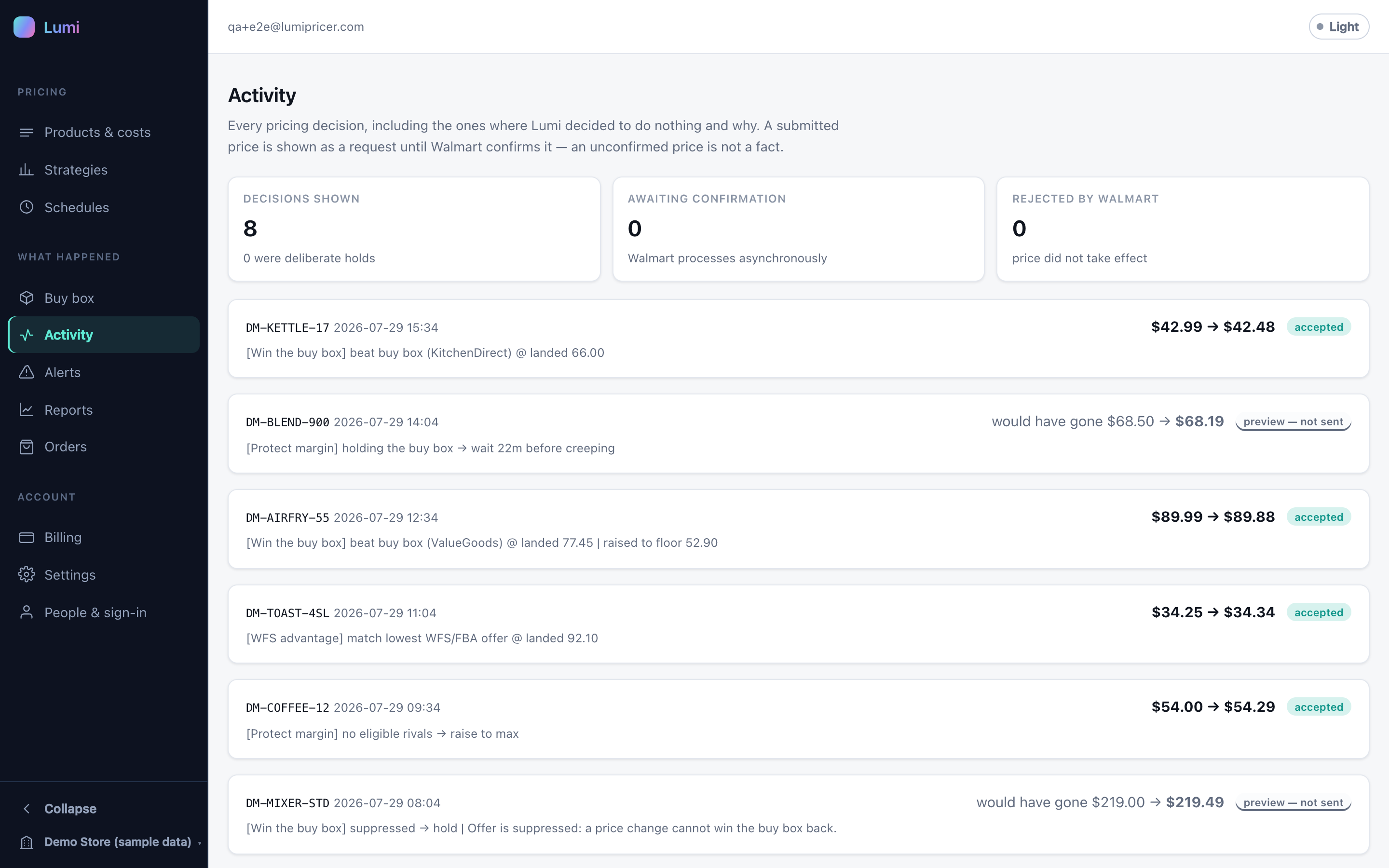
Read the price request, its recorded reason and the marketplace response as distinct parts of the story.
See whether a record describes a requested move, a decision not to move, or a preview that sent nothing.
Check the observed price and timestamp. Acknowledgement without a matching readback stays unverified.
Open the exact product to review its history and available competitor observations. Missing evidence should remain visible.
04 / Review the operation
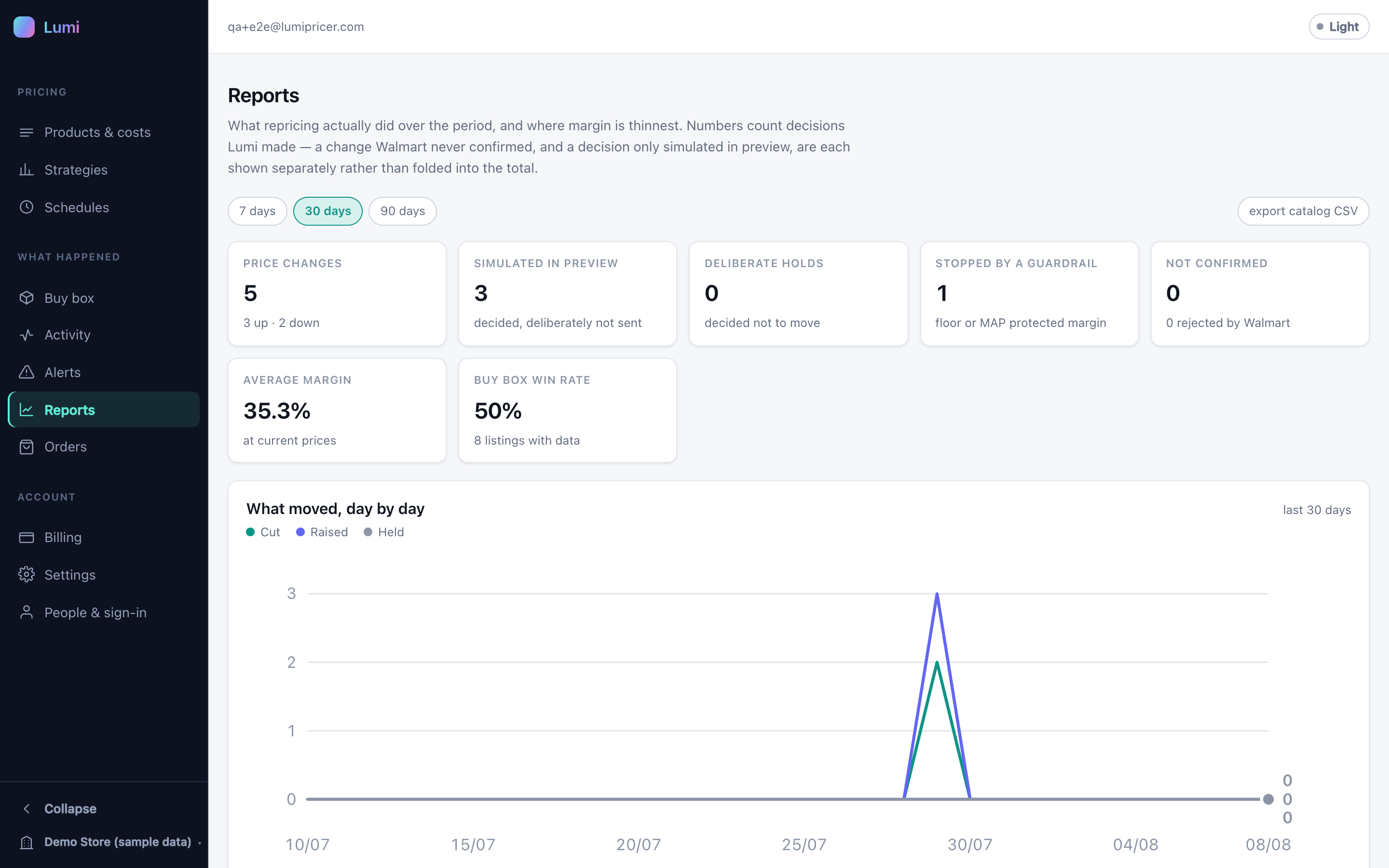
Review marketplace orders, available Buy Box observations, price activity and current margin estimates. Check the basis of each number before comparing results.
Current listing margin is not historical order profit. Observation-based Buy Box rates are not shopper-impression share. A later order is not automatically revenue caused by Lumi.
These distinctions help your team focus on real exceptions: unresolved economics, unverified requests and listings that need a closer look.
Understand the metrics and their limits →